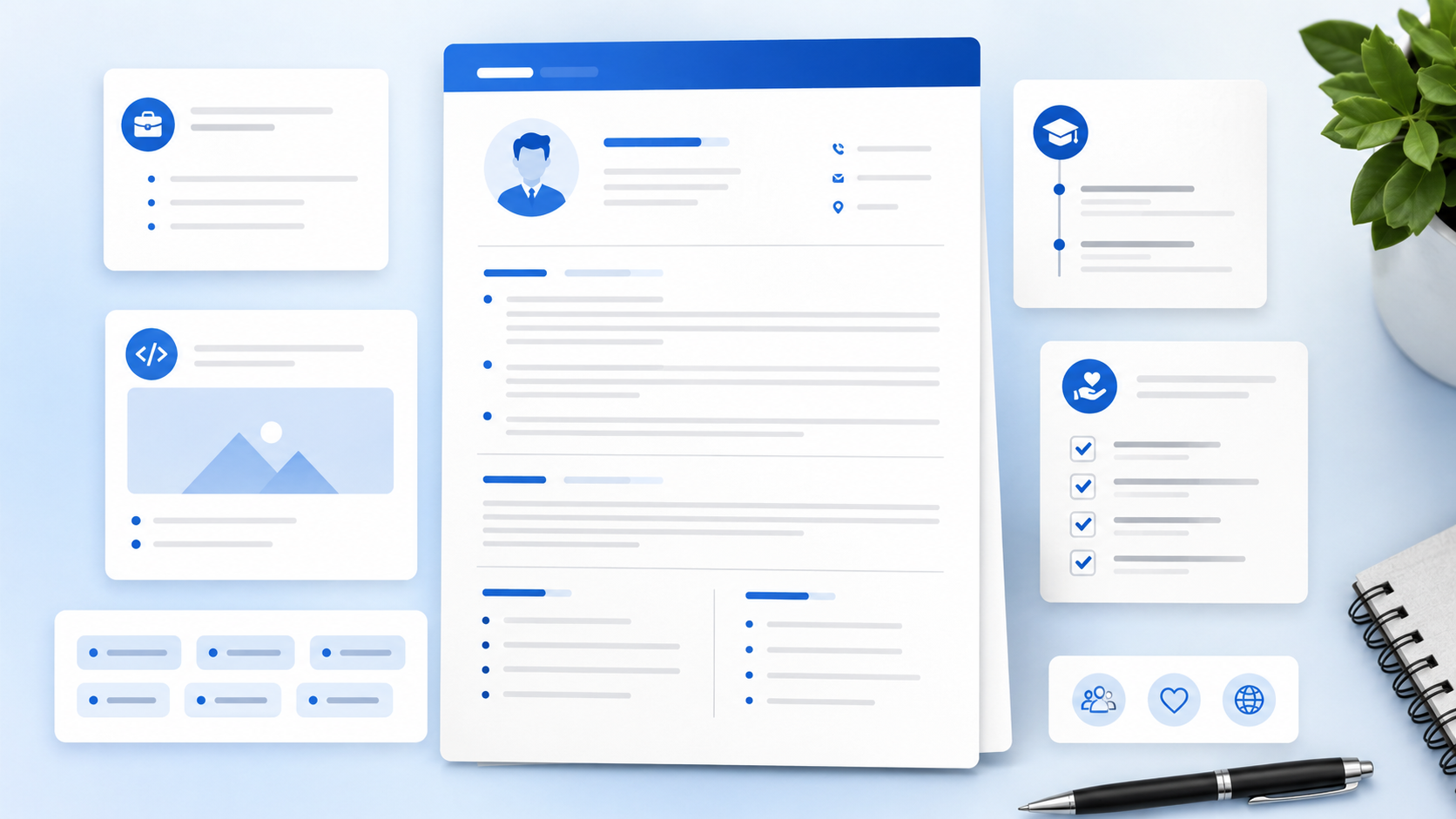
Zero work history doesn't mean zero proof. A resume no experience problem feels bigger than it actually is, because most people forget how much real evidence they already have in school projects, volunteer work, and part-time jobs.
This guide walks you through exactly what to put on a student resume or entry level resume, step by step, the mistakes that quietly weaken a thin work history, and a real before-and-after example you can copy.
TL;DR
- Lean on school projects, volunteer work, and part-time jobs as real proof.
- Write a summary with a target role, skills, and one specific proof point.
- Use action, task, tool, result for every project or volunteer bullet.
- Keep the format simple, single-column, and to one page.
- Never send the same resume to every job without small tailoring.
Table of Contents
Why "No Experience" Doesn't Mean "Nothing to Show"
Employers reviewing an entry level resume aren't expecting a long job history. They're checking for signs you can learn quickly, communicate clearly, and handle responsibility.
Think of it like a driving test. The examiner isn't asking how many years you've driven — they're checking whether you can handle the road right now, safely and calmly.
This applies just as much to a student resume built during the school year as to one built right after graduation. The sources of proof barely change — only how recent and relevant they are shifts slightly.
A strong resume no experience approach usually draws from:
- School projects, coursework, and academic achievements
- Volunteer work, clubs, or community involvement
- Part-time jobs, even outside your target field
- Personal projects you can describe with specifics
None of this requires inventing experience you don't have. It requires recognizing that experience already exists, just not in a traditional job title.
A resume no experience situation only becomes a real problem when the page stays blank instead of pulling from what's already there. Most students have more usable material than they realize once they start listing it out.
Recruiters reviewing a student resume are also used to this stage. They're not comparing you to a ten-year professional — they're comparing you to other students and recent graduates applying for the same entry level roles.
For background on why format matters this much, see what an ATS resume actually is.
That context matters, because it means the bar isn't nearly as high as it can feel. A clearly described project or part-time role is often enough to stand out in a pool of similarly early-career applicants.
How to Build a Student Resume, Step by Step
Follow these steps in order to turn a thin work history into a resume that actually competes.
Step 1: Choose a Simple, One-Page Format
Use a single-column layout with standard section headings. A clean, simple format is easier for both recruiters and applicant tracking systems to scan quickly.
This matters even more when you have fewer sections to work with. A clean layout makes the experience you do have easier to notice, instead of getting lost in an overly busy design.
Step 2: Write a Summary That Points Forward, Not Backward
Open with two to three lines naming your target role, your strongest skills, and one specific proof point. Avoid generic lines like "hard-working student seeking an opportunity."
A strong summary sets the tone for the rest of a student resume. It tells a recruiter what to expect before they've read a single bullet point below it.
| Before (Generic) | After (Specific) |
|---|---|
| "Motivated student looking for any opportunity to work" | "Marketing student with a completed social media internship and two class-led campaign projects" |
Free tools like AICV Create handle this automatically — you fill in your background, and its AI suggestions help turn a thin history into a clear, specific summary.
Step 3: Let Education Carry More Weight
List your degree, expected graduation date, relevant coursework, and any strong academic results. For an entry level resume, this section often does as much work as job history would later.
Pick coursework selectively. Three or four classes that connect directly to the job matter more than a long list of every subject you've taken.
Step 4: Turn School and Volunteer Work Into Real Bullet Points
Describe projects and volunteer roles with the same formula recruiters expect from work experience: action, task, tool, result. A specific class project reads stronger than a vague part-time job description.
Even a small project counts if you describe it with enough detail. A specific number or outcome turns a forgettable line into real proof of ability.
If a project involved a team, mention the group size and your specific role in it. That detail alone tells a recruiter more than a generic description of teamwork ever could.
Step 5: Add a Skills Section That Matches the Job
List 8-12 relevant skills, mixing technical tools with communication and teamwork skills. Only include skills you can explain if asked about them directly.
Step 6: Proofread Everything Before You Apply
Check every date, spelling, and contact detail carefully. A single typo can undercut an otherwise strong resume no experience situation, since it's often the only sample of your work a recruiter has seen.
Common Mistakes on a No Experience Resume
- Leaving big gaps of white space instead of using education fully. An underused education section wastes space that could show real proof of ability.
- Writing duties instead of results. "Worked on a class project" says nothing — describe what you actually built, organized, or improved.
- Using an overly designed template. Icons, columns, and colored sidebars can look sharp but often confuse applicant tracking systems.
- Skipping the skills section entirely. Many first-time applicants assume their education says enough, but a clear skills list gives an easy match.
- Sending an identical resume to every job. Even with limited experience, small adjustments to match each posting can meaningfully raise your response rate.
- Adding a photo, age, or personal details out of habit. Most entry level resumes don't need these details, and they take up space better used for proof of skill.
Most of these mistakes are easy to fix once you know what to look for, and none of them require more work history to solve. A quick pass through this list before you apply can make a thin resume feel noticeably stronger.
Most students make at least one of these mistakes without realizing it, simply because the resume "looks fine" on screen. A second look, ideally from someone else, tends to catch what you can't see in your own writing.
Pro Tips for a Stronger Entry Level Resume
- Lead with your strongest section, not the traditional order. If your projects are more impressive than your coursework, move them higher on the page.
- Quantify class projects like real work. A group size, a budget, or a percentage improvement adds weight to an otherwise vague line.
- Add a link to real proof. A portfolio, GitHub profile, or writing sample can matter more than another line of text.
- Keep it to one page. A focused, one-page resume reads as more confident than a stretched version padded with filler.
- Mention informal or unpaid work too. Helping a family business or building a website for a local club still counts as real, describable experience.
★ PRO TIP: Build a master list of every project, award, and skill you've ever had, even the ones that feel minor. Then pull the most relevant ones into a focused, one-page version for each application.
This habit saves time on every future application, since you'll be trimming and rearranging an existing list instead of starting from a blank page each time.
Before you submit anything, run through the full ATS resume format checklist to catch formatting issues.
AICV Create's AI writing suggestions can flag vague lines and suggest stronger phrasing, which helps a lot when you're not sure how to describe your first real project.
Real Example: A Student Resume Before and After
Nina, a recent graduate applying for entry-level marketing roles, had a resume that read: "Completed coursework in marketing and participated in group projects."
She rewrote it with specifics: "Built a social media strategy proposal for a local coffee shop, including audience research and a four-week content calendar, presented to a class of 35."
She made a similar fix to her skills section using how to format your resume skills section, so both parts of the resume matched in specificity.
Within two weeks of sending her updated resume, Nina had three interview invitations. Her actual experience hadn't changed — she'd just finally described it with enough detail for someone to see the fit.
She made the same kind of edit to her other two bullet points, adding numbers and specific tools wherever she could. The whole rewrite took about an hour, spread across one evening.
Nina's case is a good reminder that a resume no experience problem usually isn't a content problem. It's a description problem, and it's one you can fix in an evening.
Her resume length didn't change, and neither did her actual background. Only the specificity did, and that alone was enough to change how recruiters responded.
She kept the same approach for every application after that, treating each rewrite as a quick specificity check rather than a full rebuild. It got faster every time she did it.
Build Your Resume Free with AICV Create
A resume no experience situation doesn't need to hold you back. AICV Create gives students and first-time job seekers a ready-made, ATS-tested layout built for exactly this stage.
- ATS-friendly templates built for students and entry level candidates
- AI writing suggestions that turn thin experience into clear bullet points
- Instant PDF download, free to start, no design skills needed
→ Create your free resume at aicvcreate.com — no account needed to get started.
FAQ
How do I write a resume with no experience?
Use school projects, volunteer work, and part-time jobs as proof of your skills. Focus on specific actions and results rather than vague descriptions, and keep the whole resume to one page.
What should a student resume include?
Include contact details, a short summary, education, relevant coursework, projects or volunteer work, and a skills section. Education and projects typically carry more weight than they would for experienced candidates.
Is an entry level resume judged differently than an experienced one?
Yes. Recruiters reviewing an entry level resume look for learning ability, communication, and effort shown through school and projects, rather than years of job history.
How long does it take to write a resume with no experience?
Most students can finish a solid first draft in about an hour once they've gathered coursework, projects, and skills. Using a free tool like AICV Create can cut that down to 20-30 minutes.
Is aicvcreate.com really free?
Yes. AICV Create is free to use with core features including resume editing, ATS-friendly templates, and PDF export. Pro plans unlock unlimited resumes, AI writing, and advanced tools — but you can build and download a complete resume without paying anything.